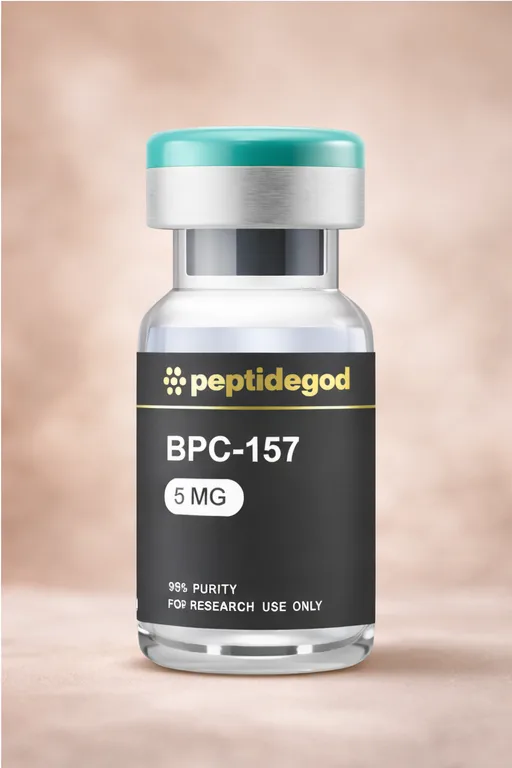
BPC-157 Benefits for Athletes: Faster Muscle and Tendon Repair
What Is BPC-157 and Why Are Researchers Studying It?
BPC-157 is a synthetic pentadecapeptide composed of 15 amino acids, derived from a protective protein found naturally in gastric juice. Its full name, Body Protection Compound 157, reflects its origin as a fragment of a broader gastroprotective protein. Researchers have investigated it extensively in animal models since the 1990s, focusing on its capacity to accelerate healing across a wide range of tissue types. Unlike anabolic compounds that primarily target muscle mass, BPC-157 appears to act through a different mechanism — modulating the nitric oxide system, promoting angiogenesis, and upregulating growth hormone receptors at injury sites.
For sports science researchers, this peptide is particularly interesting because it does not appear to behave like a classical growth factor. Instead, it influences multiple biological pathways simultaneously, which may explain the breadth of tissue types it affects in preclinical studies, including muscle, tendon, ligament, bone, and neural tissue.
Tendon and Ligament Repair: A Key Focus of BPC-157 Research
Tendons are notoriously slow to heal due to their poor blood supply and low cellularity. In research settings, BPC-157 has consistently drawn attention for its apparent ability to accelerate tendon-to-bone healing. Animal studies have shown that BPC-157 administration — whether systemic or local — is associated with faster collagen reorganization, increased fibroblast migration to injury sites, and earlier restoration of tensile strength in damaged tendons.
One mechanism proposed by researchers involves the upregulation of the early growth response gene (EGR-1), which plays a central role in tendon fibroblast proliferation and collagen synthesis. By activating this transcription factor, BPC-157 may effectively shift tendons into a more active repair state earlier in the healing cascade. This is a significant research direction because tendon injuries — Achilles tears, rotator cuff damage, patellar tendinopathy — represent some of the most career-disrupting injuries athletes face.
Muscle Repair and Satellite Cell Activity
Beyond tendons, bpc-157 benefits in skeletal muscle recovery have been a consistent theme in preclinical literature. Muscle injuries in research models treated with BPC-157 show reduced inflammatory infiltration and faster restoration of muscle fiber architecture compared to untreated controls. The peptide appears to support satellite cell activity — these are the muscle stem cells responsible for regenerating damaged fibers after strain or trauma.
Researchers have also observed that BPC-157 may counteract the damaging effects of certain toxins and physical trauma on muscle tissue. In crush-injury models, treated animals showed measurably better functional recovery within the first two weeks post-injury. While these results come from animal models and cannot be directly extrapolated to human physiology, they have made BPC-157 a subject of growing interest among sports medicine researchers exploring peptide-based recovery protocols.
Angiogenesis and the Role of Blood Flow in Recovery
One of the more mechanistically compelling aspects of BPC-157 research is its reported effect on angiogenesis — the formation of new blood vessels. Adequate vascular supply is essential for delivering oxygen, nutrients, and immune cells to injured tissue. BPC-157 has been shown in multiple studies to promote VEGF (vascular endothelial growth factor) expression and stimulate new capillary formation in ischemic and injured tissue.
This property may help explain why BPC-157 appears to benefit such a wide variety of tissue types. Tendons, which heal slowly partly because of limited vascularity, may benefit disproportionately from enhanced angiogenic signaling. Researchers hypothesize that by improving perfusion at injury sites, BPC-157 creates a more favorable healing environment independent of tissue type — an insight that continues to guide experimental study design.
Research Limitations and Considerations for Further Study
The current body of evidence supporting bpc-157 benefits is substantial at the preclinical level but remains limited in human clinical trials. The majority of published research uses rodent models, and while these provide important mechanistic insights, translating dosing, administration routes, and outcomes to human subjects requires carefully controlled trials that have not yet been completed at scale.
Researchers and institutions examining BPC-157 are currently focused on several open questions:
- What is the optimal dosing window and administration route for tendon versus muscle injuries?
- Does systemic administration produce equivalent results to local injection at the injury site?
- How does BPC-157 interact with existing rehabilitation protocols or anti-inflammatory medications?
- What are the long-term safety parameters in repeated-dose scenarios?
Until human clinical trials answer these questions, BPC-157 remains a compound of significant research interest rather than an established therapeutic agent. Athletes and sports scientists following this research should treat current findings as hypothesis-generating rather than conclusive. All information presented here is intended strictly for educational and research purposes and does not constitute medical advice or a recommendation to use any substance.
 30 capsules.webp)
 60 capsules.webp)